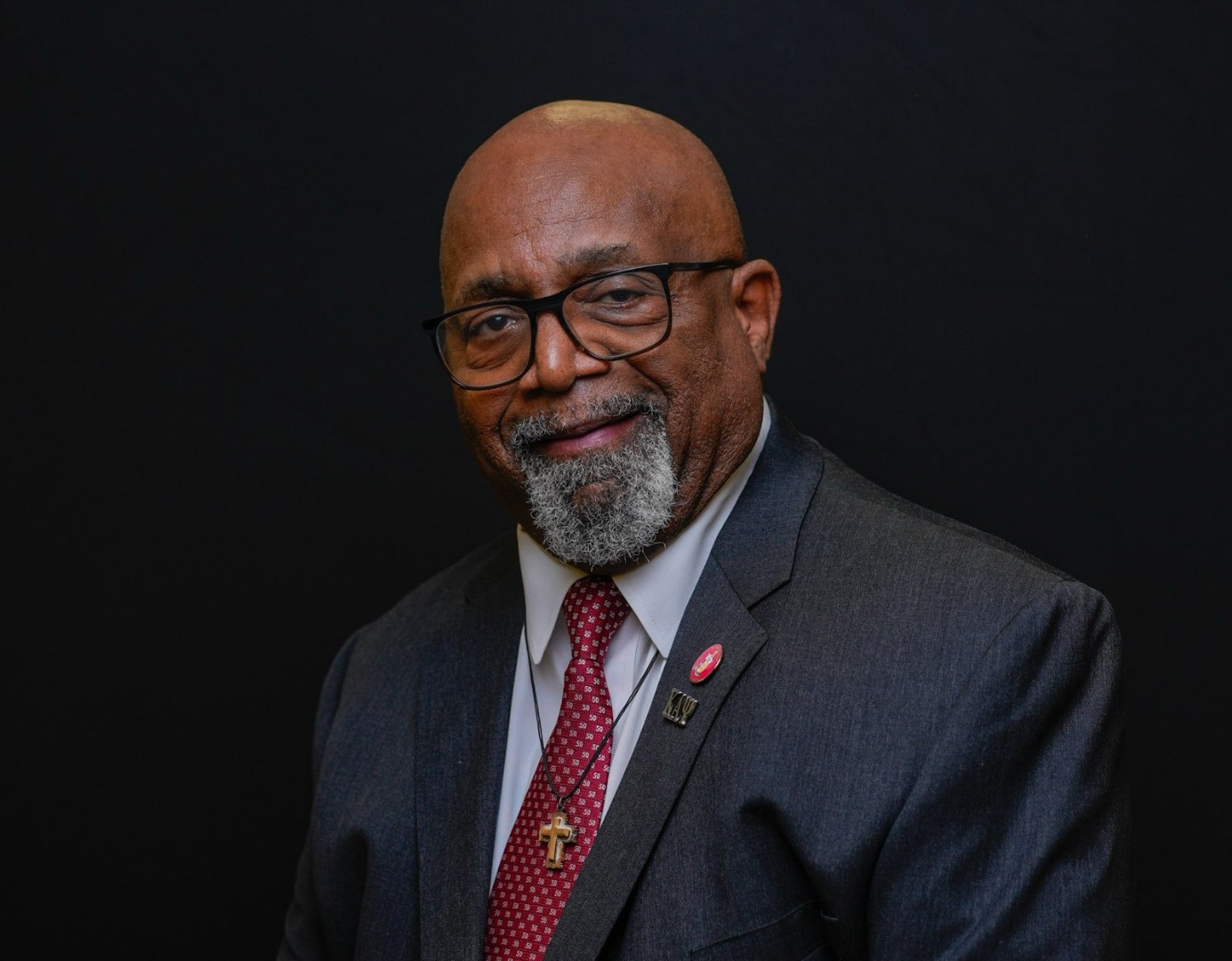

Meet the Board: Alonzo Batson Jr., A Legacy of Advocacy
Alonzo Batson Jr. has always been a man shaped by faith. As a kid growing up in Tulsa, Oklahoma, he found his way to the neighborhood church on his own volition.
At just 6 years old, he would walk down the street from his family’s home to Prince of Peace Lutheran Church, a modest congregation still meeting under a large tent before a permanent sanctuary was built. Every Sunday morning, Alonzo helped pull out folding chairs and prepare the space for worship. Soon, he became an acolyte, acted in Christmas pageants and immersed himself in church life entirely on his own initiative.
All of this wouldn’t be too unusual, seeing as Alonzo was a very independent young man, except for the fact that his family was Baptist.
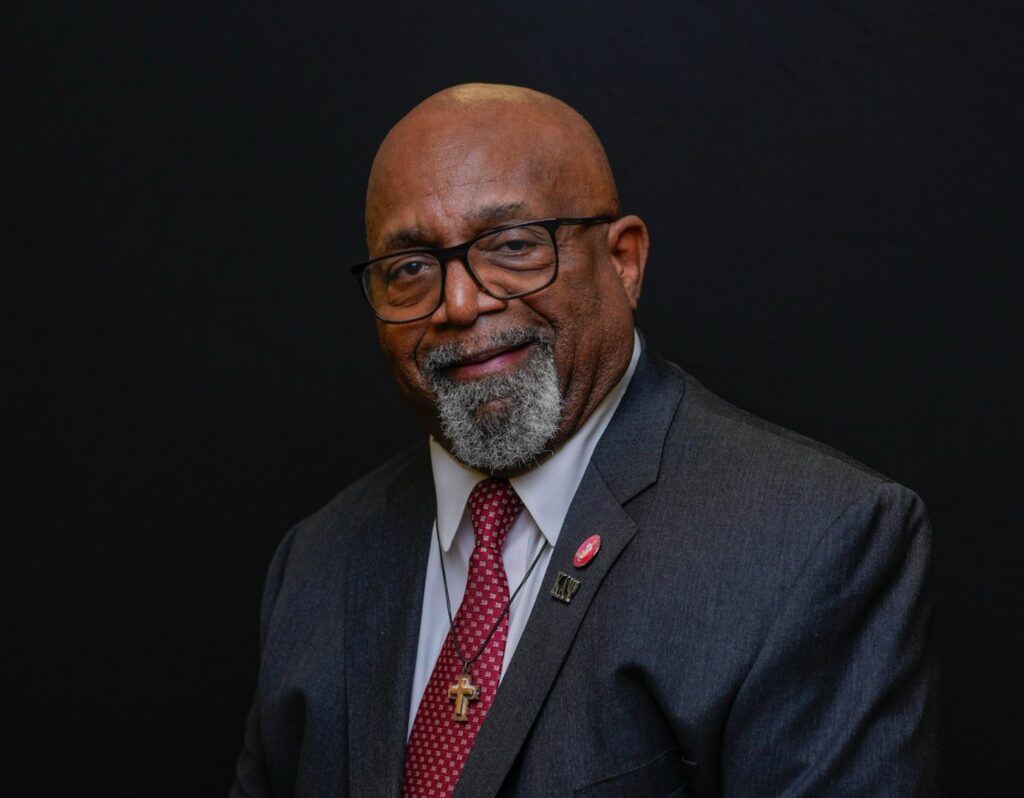
“My parents had no idea what I was doing,” Alonzo said with a laugh. “But every Sunday, I was at that Lutheran church.”
That pioneering spirit stayed with Alonzo through his childhood, followed him to college and well into adulthood. What began as the curiosity and tenacity of a young boy would become the foundation for a life shaped by faith, public service, education and advocacy.
Raised during segregation, Alonzo came of age in a country wrestling with profound racial division and inequity. Yet at Prince of Peace, he experienced something different. The church’s teachings on grace and forgiveness left a permanent impression on him, particularly the Lutheran belief that grace, not perfection, is what saves people.
“That stayed with me,” he said. “If God could forgive, then we should live with that same mindset toward others.”
As Alonzo grew, his world grew, too, while the Civil Rights Movement ignited alongside him. By eighth grade, he was serving as president of the Oklahoma state youth NAACP chapter. He participated in and led sit-ins across Oklahoma and traveled to Washington, D.C., during the height of the movement.
As a natural-born leader, it was no surprise Alonzo carried that need to serve and seek change with him into college. At Oklahoma State University, where he studied microbiology, activism became deeply intertwined with his identity. He organized demonstrations, advocated for Black students and helped lead efforts demanding better representation and resources on campus.
Despite his hard-won battles fighting for equity at the university, his proudest achievement from that time period didn’t come in the form of a diploma or a civil rights victory. It happened when his wife, Judy, gave birth to their first child.
“The proudest moment of my life was when they handed me my daughter,” he said. “Everything changed in that instant.”
That moment grounded him. While activism remained important, family became central to everything that followed.
Alonzo and his wife, Judy, graduated together from Oklahoma State before earning master’s degrees in science from Hampton University in 1974. The couple, rooted together in their love of higher education and public service, began their careers as educators in Virginia’s newly established community college system. Over the decades that followed, Alonzo built a remarkably diverse professional journey that spanned teaching, entrepreneurship, scientific education and educational leadership.
From tuxedo rentals to owning numerous Church’s Chicken locations, Alonzo dipped his feet into the world of business. While he appreciated the knowledge gained through these ventures, his commitment to young people and their education remained at the forefront.
“I was making unbelievable money,” he said. “But my commitment to church and service started suffering. I realized that wasn’t who I wanted to be.”
He returned to education with the knowledge he was meant to be there and the awareness to help other Black students learn and grow past the boundaries placed around them.
While serving on a medical school admissions committee in Virginia, Alonzo became frustrated seeing so few Black students entering medicine and science fields. Remembering how important representation had been in his own life, he made it his mission to inspire minority students to pursue careers in STEM.
“I’m a science geek,” he said with a smile. “And I wanted other young Black students to know they could be too.”
After returning to Oklahoma in the 1990s, he helped establish a medical academy designed to prepare minority students for careers in health care. Many of those students later became nurses, dentists and medical professionals.
In 1999, the family moved to Jacksonville. If it was up to Alonzo, they would have picked San Diego, but his daughter and son both were pursuing lives in Jacksonville, and Judy decided the family should stay together.
It wasn’t long before Alonzo found himself transforming educational spaces again in Florida.
After accepting a teaching role at Riverside High School — at the time, Robert E. Lee High School — Alonzo found out he was in for a rude awakening. He inherited a struggling classroom where books had literally been thrown out the windows.
“I walked in and said, ‘We can’t have this,’” he recalled with a shake of the head.
As always, Alonzo refused to give up without a fight. Rather than accepting defeat and letting his students fall through the cracks, Alonzo called every parent personally and spoke with them about their child’s future. The results were dramatic. A class once performing at failing levels ultimately improved to a B average on state assessments.
For Alonzo, education was never just about academics.
“It was about showing young people there’s no excuse for giving up on yourself,” he said.
His success led to broader district leadership opportunities, including helping oversee science initiatives throughout Jacksonville schools and eventually helping launch one of the city’s earliest early-college high school programs with support from the Gates Foundation.
Today, that leadership and belief that every person deserves to build the best life possible for themselves continues to be a guiding factor in his life after retirement.
Alonzo has served as an LSF board member for nearly a decade, where he has been able to influence and impact work serving Florida’s youth and families.
His path to LSF came through longtime friend Bill Horn, a respected Lutheran leader, long-time Clearwater City Manager and former LSF board chair whom Alonzo had known since childhood in Tulsa.
“He told me the reason he became Lutheran was because of the effort he saw us put into Prince of Peace growing up,” Alonzo said. “That meant something to me.”
At LSF, Alonzo has certainly found his areas of interest, similarly to the way he found himself at Prince of Peace Lutheran Church as a child. He remains especially passionate about education, serving as the Head Start Advisory Committee chair, attending events personally and spending time with children and families served by the organization.
Looking toward the future, Alonzo sees tremendous opportunity for LSF to continue expanding its impact statewide while remaining grounded in compassion and accountability.
He believes the organization’s strength comes from its willingness to address difficult issues head-on while maintaining focus on the humanity behind every service provided.
“LSF sees the people behind the statistics,” Alonzo said. “That’s what makes this organization special.”
He also credits LSF leadership for helping position the organization for long-term growth and sustainability.
“There’s a genuine commitment to doing this work the right way,” he said. “Not just growing bigger but growing better.” As Florida’s needs continue evolving, Alonzo hopes LSF will continue strengthening educational programming, behavioral health services and community partnerships while remaining deeply connected to the individuals and families it serves.
“We have to continue building stronger communities,” he said. “And you do that by investing in children, supporting families and giving people hope when they feel like they’ve run out of options.”
For Alonzo, service has never been about recognition or titles. It has always been about people. Whether mentoring students, advocating for civil rights, serving his church or helping guide LSF’s mission, his life reflects a consistent belief that communities become stronger when people choose to invest in one another.
Now retired, Alonzo and Judy continue enjoying life in Jacksonville, surrounded by children, grandchildren and the communities they have spent decades serving.
Everyone who knows Alonzo will tell you he has led an impressive life. Looking back, Alonzo sees a clear thread connecting every chapter of his life, from the little boy setting up folding chairs beneath a church tent to the educator, advocate and leader he became.
“God carried me through all of it,” he said. “Every single step.”
