

Inside a Florida Youth Shelter: How LSF Oasis Supports Teens and Their Families
When Kai started high school, he made a decision that would eventually land him in front of a judge. He wasn’t going to school anymore.
It wasn’t that he couldn’t handle the schoolwork. In fact, he’d spent most of his academic career earning A’s and B’s. He just didn’t want to go, and as far as he was concerned, he was old enough to make that decision for himself.
“I’d never liked school, but I did well,” Kai explained. “When I got to high school, I got to the point where I thought I didn’t have to go. I felt like I was a grown-up, so I stopped going.”
His grandmother, Susan, who had been raising Kai alongside her husband since he was 5 years old, wasn’t quite sure what to do with that newfound independence.
“As soon as Kai started refusing to go to school, there wasn’t a lot we could do,” Susan said. “We could physically put him in a car and make him get out, but we couldn’t make him do the work. It was a helpless feeling.”
For Susan, the situation was particularly difficult because she knew how much Kai had already been through. His childhood had been marked by instability, beginning with his parents’ divorce when he was very young. He spent his earliest years moving between relatives, first living with his father and later with his aunt and her wife, before eventually coming into his grandparents’ care.
“Early childhood was very chaotic,” Kai recalled. “I got moved around a lot within our family.”
By the time Susan and her husband became his guardians, Kai had already experienced a great deal of uncertainty. They were determined to provide him with a stable home and a childhood he could remember fondly.
For a while, things seemed to be going well. While living in Maryland, Kai played soccer and basketball, enjoyed the family’s country surroundings and excelled academically. When the family moved to Florida about three years ago, Susan began noticing changes.

Kai struggled to make friends and spent more time alone in his room, connecting with the friends he’d left behind in Maryland through his computer. Susan believes the move contributed to his growing isolation.
By ninth grade, school refusal was only one of the challenges the family was facing. Kai had become increasingly withdrawn, wasn’t taking care of his personal hygiene and regularly refused meals. Susan and her husband tried working with outside therapists, school social workers and administrators, but nothing seemed to make much of a difference.
Kai had attended therapy since he was young, but as he got older, finding someone he connected with became more difficult. Some therapists weren’t a good fit, and eventually, he began refusing counseling altogether.
Susan had spent years doing everything she could to give her grandson a better start in life, but she was running out of ideas.
Eventually, a school social worker connected the family with LSF, where they began working with a counselor named Claudia. As Kai’s unexcused absences continued, he became involved with the court system for truancy and was ordered to spend 35 days at LSF’s Oasis Youth Shelter during his sophomore year.
Kai wasn’t particularly excited about the arrangement. In fact, he was expecting the worst.
“I was expecting it to be like prison,” he admitted. “It’s not like that. It was a lot better than I thought it would be. It was kind of relaxing and relieving to realize that it wasn’t so bad.”
For a teenager who had spent months resisting any sort of routine, Oasis was a completed 180.
Kai’s mornings started around 4:30 a.m., when residents woke up to get ready for school. After breakfast and a little time watching cartoons in the common area, they headed out around 5:30 a.m.
Kai attended a credit recovery high school, which meant he was usually finished with classes around noon. When he returned to Oasis, there was lunch, some downtime and eventually an afternoon study period. Everyone spent an hour working on school assignments, reading or doing something educational.
Dinner was prepared by the staff, with sandwiches available for anyone who didn’t like what was being served. After dinner came showers, and during the school year, bedtime was generally 8 p.m.
Kai found that consistency was something he needed. At Oasis, LSF provides young people experiencing challenges at home, in school or in their personal lives with a safe place to work through those difficulties. Counseling, educational support and daily routines are all part of helping residents develop healthier habits and make better decisions.
But for Kai, the people working at Oasis made just as much of an impression as the structure.
Between early mornings, study hours and counseling sessions, there were also conversations, laughter and opportunities for the kids to connect with adults who genuinely enjoyed spending time with them.
Kai was assigned a counselor at Oasis and continued working with Claudia, who had already been supporting his family before his placement. He appreciated that the counselors didn’t rush him through conversations or make him feel like he was just another kid causing trouble.
“She’s very patient, that’s one of the best things,” Kai said of Claudia. “She’ll let you talk for hours. She’s got great control of her emotions. I’ve never even seen her be close to being angry.”
When Kai returned home after his first 35 days at Oasis, Susan noticed changes almost immediately.
For months, she’d struggled to get him to bathe regularly or eat nutritious meals. At Oasis, showers were part of the nightly routine, and residents sat down to meals prepared by the staff. Those habits started following him home.

The progress was encouraging, but it wasn’t permanent. Over time, Kai began falling back into some of his old habits, and after missing summer school, he returned to Oasis for another 60 days.
Susan believes that second stay made an even greater difference.
“When he came home from the first time, he was so much better, but he did slowly revert,” she explained. “After the 60-day stay this summer, there has been less of the reversion. We have a few words every now and then, but it has gotten so much better.”
Kai had also started recognizing how much his lack of confidence had affected his life. Before Oasis, he described himself as extremely introverted. He struggled to make friends, avoided conversations and often relied on his grandparents to speak for him.
He hadn’t always been that way. Susan remembered the little boy who played sports in Maryland and enjoyed spending time outdoors, but somewhere between moving to Florida, losing touch with friends and entering high school, Kai had become increasingly uncomfortable putting himself out there.
“After my first stay at Oasis, I learned more and became less naive about myself and my future,” Kai said. “I decided to turn it around and that enough was enough.”
He began working on his confidence, taking more of an interest in his appearance and exploring modeling. He started thinking about the kind of person he wanted to be and what he could do to get there.
For Susan, one of the clearest signs of that change came in August, when Kai asked her to take him for a haircut. He’d found a style he liked and wanted to try something different.

It was a relatively ordinary request from a teenage boy, but coming from someone who previously showed little interest in his personal appearance, Susan was more than happy to oblige.
While Kai was learning to take better care of himself and becoming more comfortable with who he was, Susan was experiencing some changes of her own.
Raising her grandson had been a responsibility she’d taken on willingly, but that didn’t make the difficult years any easier. She and her husband had tried everything they knew to help Kai, and there were times when the tension at home became overwhelming.
“Lutheran Services Florida has helped us more than any organization we asked for help,” Susan said.
While Kai was at Oasis, Susan and her husband participated in video conferences and received updates from his counselors. They could talk with him, hear how he was doing and stay involved in his progress. The communication gave Susan peace of mind, particularly after spending so long wondering whether anyone could help.
“When I interacted with Oasis staff, I noticed how much they cared about these kids, and it made me feel very confident leaving him there,” she said.
But one of the most meaningful changes in their relationship came from a conversation that had nothing to do with school, hygiene or household rules.
During counseling, Kai told Claudia that his grandmother never wanted to spend time with him.
Susan couldn’t believe it.
She’d spent years assuming Kai wanted nothing to do with her. He would come home, disappear into his bedroom and spend hours by himself. She figured he preferred it that way.
As it turned out, they were both making the same assumption about each other.
“He told her that I never wanted to spend time with him,” Susan said. “I thought he never wanted to spend time with me because he’d come home from school and go straight to his room and just stay there.”
It was a misunderstanding that had quietly created distance between two people who loved each other very much but didn’t always know how to communicate it.
With Claudia’s help, they were finally able to talk about what they both wanted from their relationship and break down the walls between them.
These days, Kai and Susan are spending more time together. They’ve watched “Supergirl” and other shows on television, taken their dog to the dog park and started making room for each other in their everyday lives.
“My relationship with Kai now is so much better, it’s like night and day,” she said.
Kai has spent a total of 95 days at Oasis across two stays, which gives him a pretty good perspective on what life there is actually like. He knows the early mornings aren’t particularly fun, that study time can feel long and that there are rules residents won’t always agree with.
He also knows the people working there want to help.
“I would tell any kid who goes to Oasis or any youth shelter to listen to the staff,” Kai said. “If you talk to the staff, they will absolutely help you.”
Susan hopes other families who find themselves in a similar position won’t hesitate to ask for that help. She knows the word “shelter” can make parents and caregivers nervous, and she understands why. Before Kai’s first stay, she wasn’t sure what they were getting into.
“I would want people to know they shouldn’t be afraid of Oasis or any youth shelter because the staff are really there to help and they do help, you see positive results,” she said.
Through LSF’s youth shelter and family counseling services, young people like Kai have access to guidance, structure and support during difficult periods in their lives. And caregivers like Susan receive support too.
Kai and Susan still have disagreements. Something that could be described as extremely normal between a teenager and his grandmother.
But they’re talking, spending time together and finding ways to understand each other that didn’t seem possible before they connected with LSF.
Kai is now a junior in high school and plans to join the track and field team, his first organized sport since the COVID-19 pandemic. He’s also attending school regularly, catching the bus each morning without the arguments that once dominated the family’s routine.
Susan is enjoying the company of the grandson she spent so long trying to reach while getting to know the young man he’s becoming.
And for a family that once struggled just to get through the morning without an argument about school, those changes have made everyday life look a lot different.
“The whole point of kids going to the shelter is to change them for the better,” Kai said. “It’s there to help kids in every way they possibly can.”
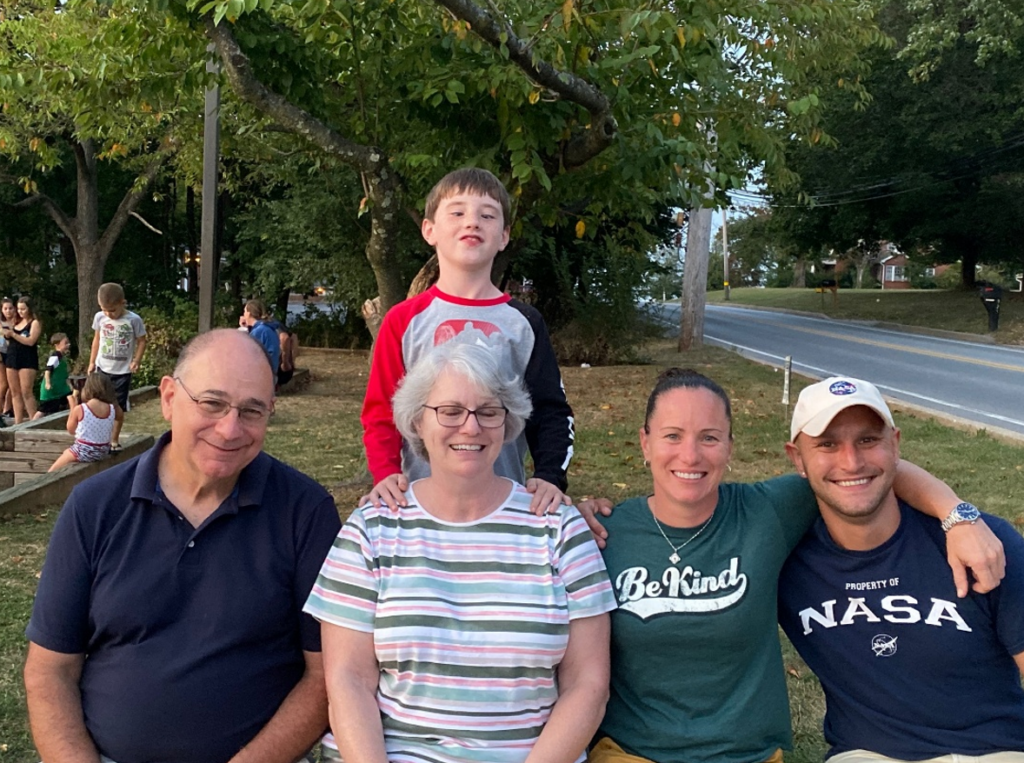
Kai arrived at Oasis expecting something closer to punishment, but he left with a better understanding of himself, a stronger relationship with his grandmother and some much-needed confidence in who he is and who he can become.
For Susan, seeing her grandson catch the bus every morning, take pride in his appearance and occasionally ask her to sit down and watch a couple of episodes of television with him is more than enough reason to be grateful she made that first call to LSF.
