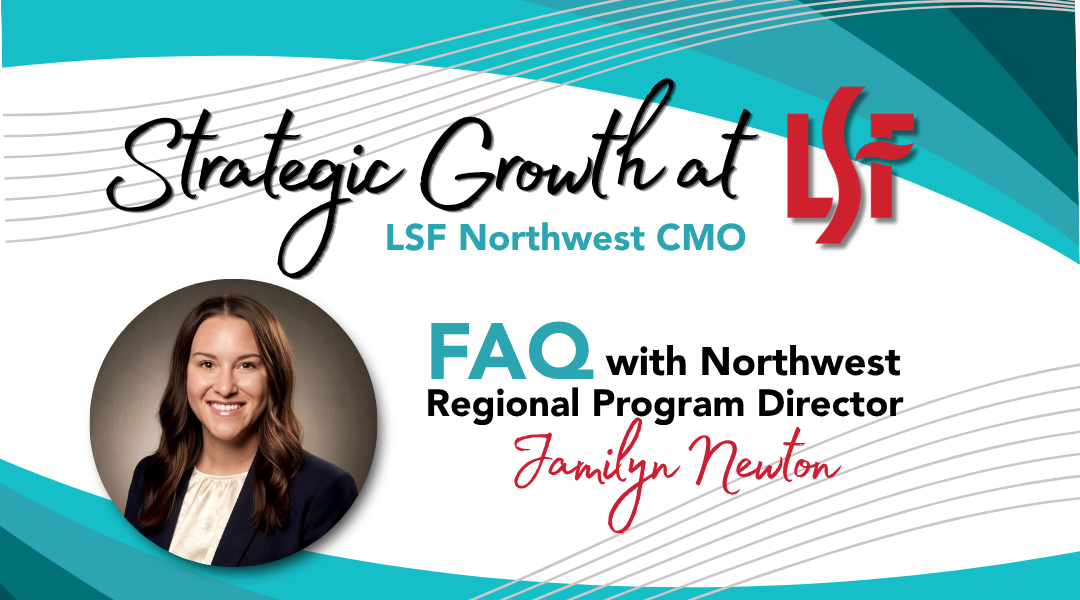

A New Chapter for Child Welfare in Northwest Florida: A Q&A With Jamilyn Newton
LSF will officially assume responsibility for the Northwest Case Management Organization, overseeing child welfare case management in Santa Rosa, Okaloosa and Walton counties. It’s work we know well.
Across Florida, LSF teams have spent years walking alongside children and families involved in the child welfare system, bringing together the people, services and support needed to keep children safe and help families move forward.
We’re excited to bring that experience to the Panhandle, where we have deep roots. Our teams know these communities, and many of the relationships that make this work possible are already here. The Northwest CMO gives us an opportunity to build on that foundation while bringing LSF’s statewide child welfare experience and infrastructure to families at a particularly important moment in their lives.
Taking on a transition of this size comes with plenty of moving pieces. But behind every case being transferred is a child and a family who need the system around them to keep moving. For LSF Northwest Regional Program Director Jamilyn Newton, that is where the focus begins.
We sat down with Jamilyn ahead of the Oct. 1 transition to talk about what LSF is bringing to Northwest Florida, what families and community partners can expect and what success will look like in the months ahead.
LSF will officially assume responsibility for the Northwest Case Management Organization, overseeing child welfare case management in Santa Rosa, Okaloosa and Walton counties. It’s work we know well.
Across Florida, LSF teams have spent years walking alongside children and families involved in the child welfare system, bringing together the people, services and support needed to keep children safe and help families move forward.
We’re excited to bring that experience to the Panhandle, where we have deep roots. Our teams know these communities, and many of the relationships that make this work possible are already here. The Northwest CMO gives us an opportunity to build on that foundation while bringing LSF’s statewide child welfare experience and infrastructure to families at a particularly important moment in their lives.
Taking on a transition of this size comes with plenty of moving pieces. But behind every case being transferred is a child and a family who need the system around them to keep moving. For LSF Northwest Regional Program Director Jamilyn Newton, that is where the focus begins.
We sat down with Jamilyn ahead of the Oct. 1 transition to talk about what LSF is bringing to Northwest Florida, what families and community partners can expect and what success will look like in the months ahead.
Q: Is LSF new to Northwest Florida?
Newton: Not at all, and I think that’s an important part of this story. LSF already serves children and families in Northwest Florida, so we aren’t arriving in this community for the first time to take on case management.
We’ve been serving children and families in this part of the state for decades. Our work here has included services for youth and families in crisis through our CINS/FINS programs, residential shelter, community-based counseling, family support, Head Start and now case management. We operate Currie House in Pensacola and Hope House in Crestview, and we recently took over Head Start in Okaloosa County.
LSF also has a history of guardianship work in Northwest Florida. So, when you look at our footprint over time, you see an organization that has worked with people at very different stages of life and during very different circumstances.
One thing that’s important to understand about LSF is that we don’t grow simply for the sake of getting bigger. When we take on a new contract or expand into a new area of service, it’s because we see a need and believe we have the experience, infrastructure and people to meet that need well. Growth has to make sense for our mission, and more importantly, it has to make sense for the children and families who are counting on these services.
What connects all of that work is our belief that people do better when they have strong, local support around them. That’s something we already understand about Northwest Florida, and it’s something we’ll carry into the CMO.
Q: Transitions can create uncertainty for staff as well as families. How are you thinking about the workforce as Oct. 1 approaches?
Newton: The people doing this work every day are critical to a successful transition. Child welfare case management is demanding work, and it requires people who have knowledge, judgment, compassion and a real commitment to families.
We want staff to feel supported and prepared. That means clear expectations, strong supervision, access to leadership and the tools they need to do their jobs well. It also means creating a culture where people can ask questions and raise concerns.
We have been blessed with strong candidates that feel called to work with LSF. Throughout the staffing process we’ve received wonderful feedback and anticipation for LSF to come in and do this work. Candidates have shared that they applied because they know of LSF’s history and strong track record in child welfare and case management.
Q: What does LSF’s statewide experience allow you to bring to a local operation like the Northwest CMO?
Newton: It gives us a strong infrastructure to stand on. LSF has spent years building systems around child welfare case management, quality assurance, compliance, training, supervision and performance.
That matters because case management requires both heart and discipline. Families deserve compassionate people working alongside them, but they also deserve an organization that meets deadlines, monitors outcomes, communicates clearly and addresses problems when something isn’t working.
We can bring that larger organizational experience to Northwest Florida while still making decisions with the local community in mind.
Q: What will success look like for you during the first few months?
Newton: Initially, success is going to look pretty simple: stability.
We want children and families to continue receiving the services they need. We want our case managers to know their families and understand their responsibilities. We want providers and partners to know how to work with us. And we want to identify issues early so we can address them before they become bigger problems.
From there, we can continue looking at performance, strengthening practice and identifying opportunities to improve. But first, we have to earn trust by doing the fundamentals well every day.
Q: Looking beyond the transition, what is your vision for the Northwest CMO?
Newton: I want us to be known as a team that does what it says it will do.
I want families to feel respected. I want our partners to see us as responsive and collaborative. I want our staff to be proud of the quality of their work. Most importantly, I want children to be safer and families to leave the system stronger than when they entered it.
There will always be difficult days in child welfare. The circumstances that bring families to us are complicated, and there isn’t always an easy answer. But we can bring consistency, professionalism, compassion and accountability to every decision we make. That’s what I want this team to represent in Northwest Florida.
